
 Cart is empty
by Julie Lenore Baker
I think we’ve all asked ourselves this question at some time in our life and usually not come up with a very satisfactory answer. We tend to start tackling it by blaming ourselves; after all, we work hard at our lives so surely, we should feel comfortable with them and know who we are, what we are and where we are going… We are constantly told we live in a world of opportunity; we can do anything we want and have anything we want but the reality is that it’s this very fact that perpetually fuels the question. The constant desire to possess things and achieve things can leave some part of us unfulfilled and unconnected to our true selves. From childhood we’re constantly shaped by the consumer-based society that we live in, we’re encouraged to identify ourselves by what we own and what we do. For example: I drive a BMW or I work as a personal assistant. Even if you’ve managed to removed yourself from the reaches of modern living and you try to find the answers to the question in your personal relationships – the fulfilment you get from being a mother, or the fun you share in being a sister or a wife – still you can’t really answer the question other than at surface level. Many people settle for these surface level answers but there are a few people that can’t rest there, they know there is a deeper answer.
However, fulfilling our work is, however nice our possessions are and how ever well we relate to other people doesn’t really explain who we are, it just explains how we fit in to the world. In our quiet moment we still ask ourselves: where is the real me? How do I connect to myself and get guidance on life? What pathway should I be following? Is it really all about money and possessions?
I believe the answer lies in nurturing our soul and until we understand how to do this, we will continue to feel that the act of daily living is draining us. In modern times the soul has become neglected and forgotten about, a part of us that is very rarely spoken of. For this very reason it has become a lonely place; small and shrivelled it becomes a place we try to ignore. After all, who is going to see it? And if it’s unseen by the world, why trouble ourselves about its wellbeing? The first question of who is going to see it, I can answer easily: nobody – but then it’s not there for other people to see, it’s there for you; soul felt joy is one of the most exciting experiences we can have. The second question, should you ignore it? How can you possibly want to ignore any part of yourself? You look after your nails, your hair, your skin; you also need to look after your soul. Our souls are our homes – not our bricks and mortar homes, they are a home we take everywhere with us, a place where we should be able to go to find self-worth, hope and enthusiasm to guide us on our life’s journey. I believe that it’s in our soul we find a special and spiritual entity that I call our spiritual parent and it’s this spiritual parent that we need to connect to. When we can access this nonmaterialistic helper, we truly understand what we want from life and how to get it.
We can all understand that we get our physical characteristics – for example, eye colour – from our physical parents. We know this type of thing is passed on genetically, but who gives us our love of certain colours or our love of a certain type of music? I believe this is inherited from our spiritual parent. We’re not only children of our physical parents but children of our spiritual parent as well. Unfortunately however the chaos of our modern world doesn’t give us time to connect to this soft, gentle, nurturing helper that lives in the recesses of our soul and so much of the information it wants to share with us is never heard and we end up lacking in understanding of what we truly want from life to make us happy.
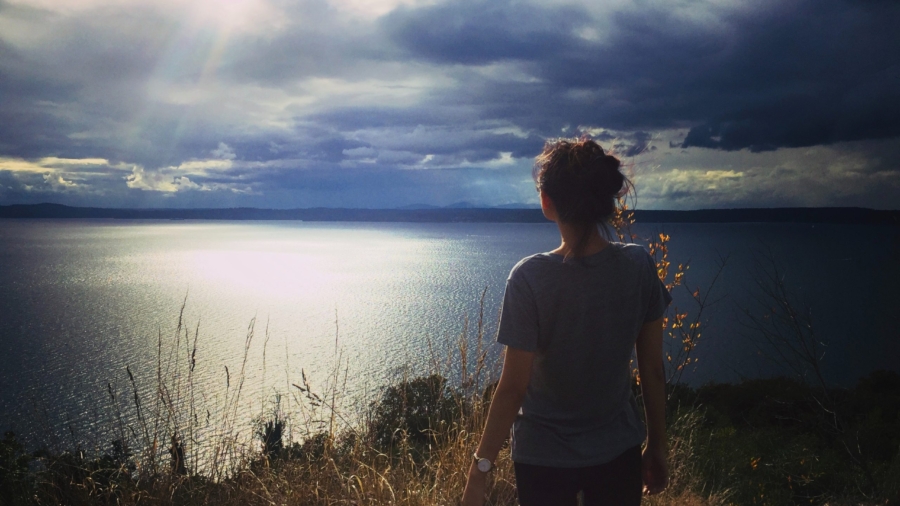
To achieve connection to our spiritual parent we need to spend time alone in quiet places. The best place to find the correct environment is in nature, especially among green growing things – trees and plants. Trees and plants are constantly connected to their spiritual parent; they have physical parents who dictate things like what species they will be, in the same way our parents pass physical characteristics on to us, and they also have a spiritual parent that they are in constant contact with because unlike us they are never distracted from their spiritual connection by things like vanity and ego – what tree ever worried that its leaves were not the right shape or felt slighted because the birds chose to make their nests in the tree stood next to it? Trees and plants know what is important, their lives are calm and simple and when we’re among them we naturally align ourselves with them and their life philosophy, we understand instinctively that they have a wisdom that we’ve lost. In fact at a deep cellular level we’re so aware that trees and plants can show us how to connect to our benevolent spiritual parent that even in our modern technical world it’s hard to find a work place that isn’t embellished by at least one potted plant or a picture of a garden or a countryside scene hung on a wall. We inherently know that they are role models to calm and self-discovery, but we don’t understand why.
So next time you’re feeling confused, disconnected from yourself or overwhelmed by the chaos of modern life, try going for a walk in the countryside, get to know some trees, look at them, study them, even talk to them. And in the privacy of your empty soul you might even find they talk back to you…
 JULIE LENORE BAKER was born over fifty years ago on the outskirts of a Manchester suburb and from day one felt the countryside calling to her. As she played in the garden of her parents’ newly-built semi she remember looking out over the endless farmland; in the winter months it was covered in snow, in the spring time she watched the birds swoop in and out of the hedgerows and in the summer she observed the otherworldly shimmer of the summer sun on all before her. She imbibed the sights, sounds and the fragrances of nature and felt an attraction as if she were being called by a living entity long before she knew how to put any of this into words. As she grew up, Julie was eventually able to explore the great outdoors and she followed this soft and welcoming call she had been hearing since her earliest days. She listened and observed, she used ALL her senses to try and understand it and is glad she did, for so much of the wisdom she possesses today has come from the quiet and solitary time she spent alone in nature.
